 Warontherocks
 China-US Relations: Strategic Stability Amid Rising Tensions
Article Content

- •Recent talks between Trump and Xi signal ongoing tensions in China-US relations.
- •Economic interdependence is both a leverage point and a vulnerability for both nations.
- •The risk of armed conflict remains a significant concern for policymakers.
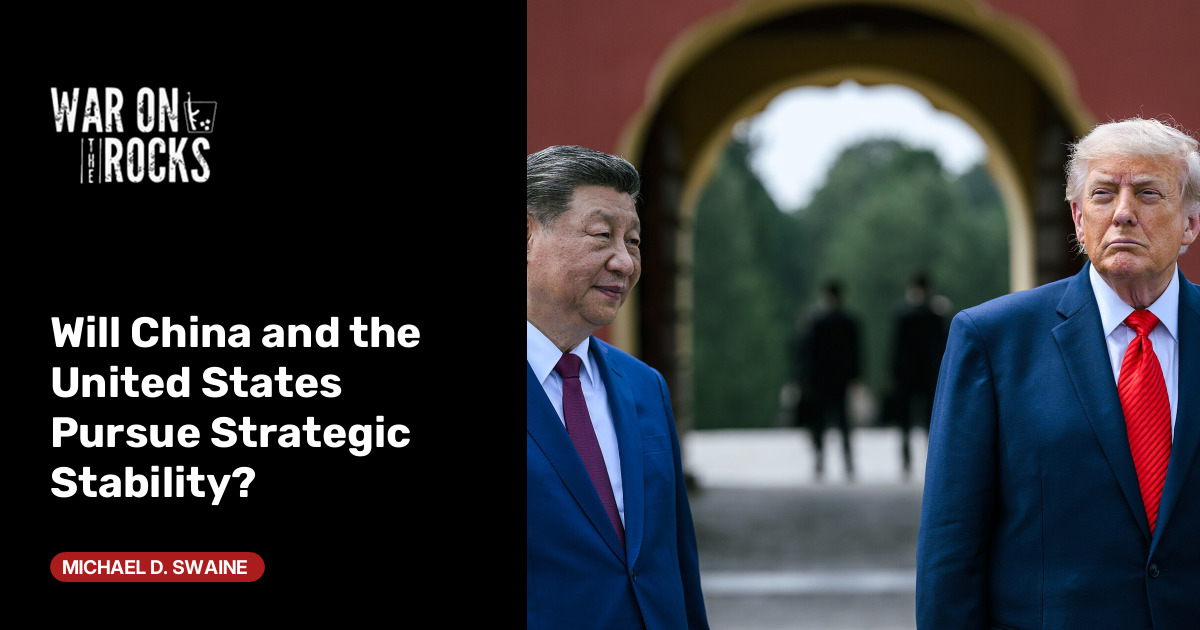
Recent discussions between President Trump and President Xi have raised questions about the future of China-US relations. The evolving dynamics are characterized by economic interdependence and the potential for conflict, particularly following US military involvement in Iran. Analysts suggest that the risk of armed conflict remains high, influenced by strategic stability considerations. The concept of 'Mutually Assured Economic Destruction' (MAED) is highlighted as a key factor in managing rivalry. The current geopolitical landscape indicates that both nations are navigating a complex web of vulnerabilities and interdependencies. The implications of these developments affect not only bilateral relations but also global stability.
Ask AI about this cluster
Answers cite the sources they use
Timeline
More articles in this cluster (2)
Continue Reading
 Critical Zero-Day Vulnerability in Cisco Secure Email Gateway Exploited On September 14, 2026, Cisco disclosed a critical SQL injection vulnerability (CVE-2026-76461) in its Secure Email Gateway, allowing unauthenticated remote attackers to execute arbitrary commands with root privileges. This vulnerability arises from insufficient validation in the email parsing logic. Cisco confirmed…
  Critical WSO2 API Manager Vulnerability Under Active Exploitation A critical vulnerability (CVE-2026-5430) in WSO2 API Manager is being actively exploited, allowing unauthenticated attackers to forge admin tokens via JWT authentication bypass. This flaw, which has a CVSS score of 10.0, affects multiple WSO2 products including API Manager, Universal Gateway, Traffic Manager, and API…