 Gigazine
 Google Enhances Android Security with AI and Anti-Theft Features
Article Content

- •Google introduced AI-driven security enhancements in Android 17 to combat mobile fraud.
- •New anti-theft features include biometric authentication and default activation on updated devices.
- •Live Threat Detection will monitor suspicious app behaviors to prevent unauthorized access.
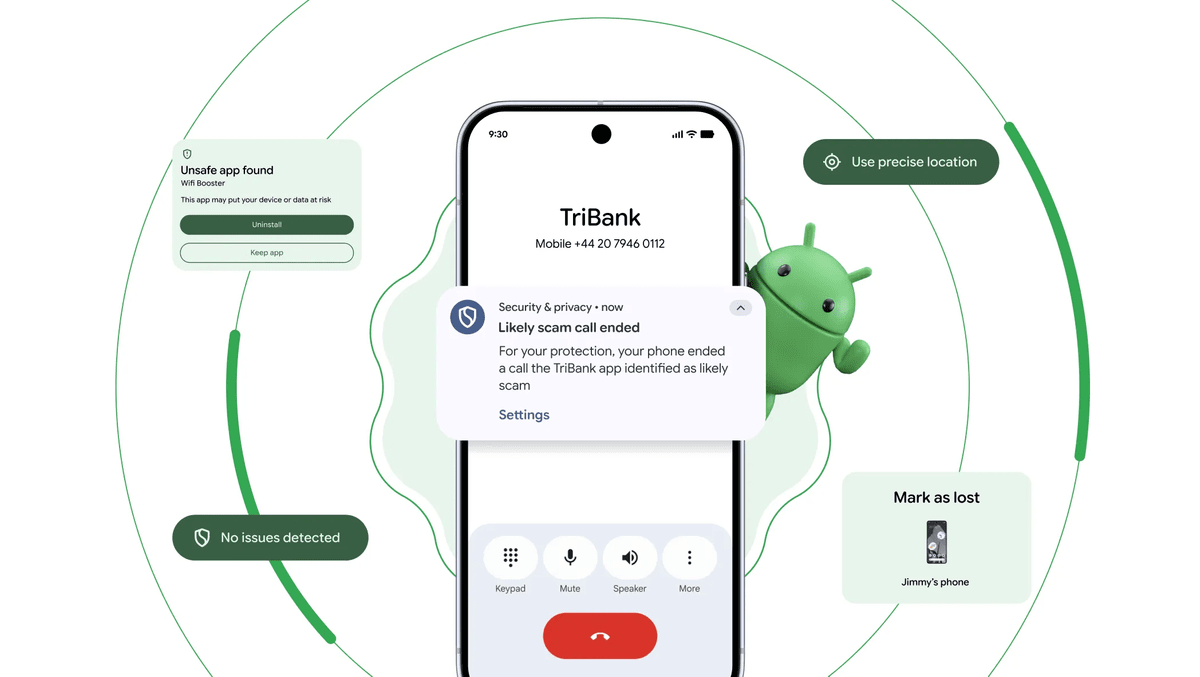
On May 12, 2026, Google announced significant updates to Android's security and privacy features, focusing on combating mobile fraud and enhancing anti-theft measures. The updates include AI-powered detection for suspicious app behavior, biometric authentication for device tracking, and new intrusion logs to aid in spyware investigations. The 'Live Threat Detection' feature will now monitor app behaviors such as SMS forwarding and unauthorized access to sensitive data. Enhanced anti-theft features will be enabled by default on new devices and those updated to Android 17, making it harder for thieves to disable tracking. Google aims to protect users from phishing calls and unauthorized data sharing, reinforcing its defenses against cyber threats. These measures come in response to the increasing sophistication of mobile cyberattacks targeting personal information and financial data.
Ask AI about this cluster
Answers cite the sources they use
Timeline
More articles in this cluster (5)
Continue Reading
 Critical WSO2 API Manager Vulnerability Under Active Exploitation A critical vulnerability (CVE-2026-5430) in WSO2 API Manager is being actively exploited, allowing unauthenticated attackers to forge admin tokens via JWT authentication bypass. This flaw, which has a CVSS score of 10.0, affects multiple WSO2 products including API Manager, Universal Gateway, Traffic Manager, and API…
  Critical Linux Kernel Vulnerability CVE-2025-39682 Under Active Exploitation A critical vulnerability (CVE-2025-39682) in the Linux kernel allows remote code execution through mishandling of zero-length TLS records. This flaw affects kTLS-enabled hosts running vulnerable kernel versions, exposing them to attackers without authentication. CISA added this vulnerability to its Known Exploited…