 Securitybrief.Co.Nz
 LeakNet Ransomware Expands Tactics with ClickFix and Deno Loader
Article Content

- •LeakNet employs ClickFix lures to trick users into executing malicious commands.
- •The group uses a Deno-based loader for stealthy, fileless attacks that minimize detection.
- •LeakNet's operations are expanding, with a notable increase in victim count and sophistication.
LeakNet, a ransomware group, has adopted new tactics involving ClickFix social engineering and a Deno-based fileless loader. This shift allows them to gain initial access through compromised websites, prompting users to execute malicious commands disguised as error fixes. The group has been active since late 2024 and typically averages three victims per month, but recent changes indicate a scaling up of operations. The ClickFix technique has been linked to 59% of top malware families in 2025, complicating detection efforts for defenders. The Deno loader executes malicious payloads in memory, leaving minimal forensic traces. This method utilizes legitimate developer tools to evade security measures, making it harder for organizations to detect and respond to the attacks. ReliaQuest has high confidence in linking these activities to LeakNet based on consistent infrastructure and tactics observed in recent incidents.
Ask AI about this cluster
Answers cite the sources they use
Timeline
More articles in this cluster (7)
Following this threat?
Track LeakNet and ClickFix in your own feed — you're alerted when they show up in new reporting, leak sites or exploitation.
Free account · no card needed
Continue Reading
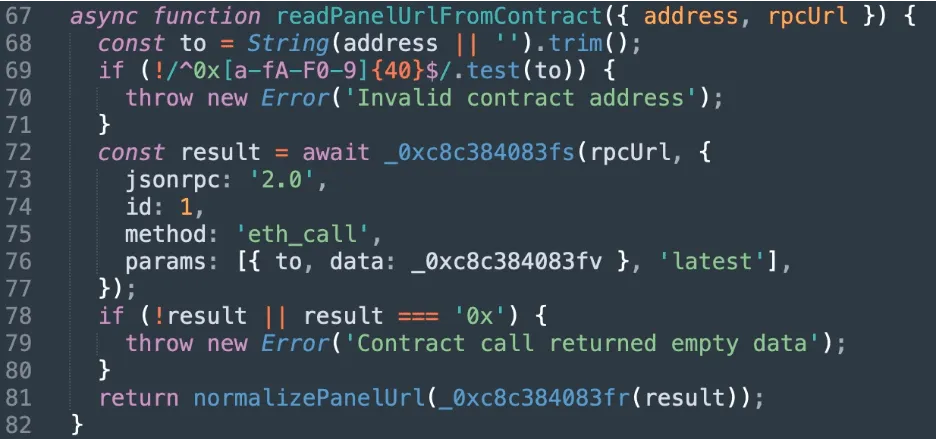 New ChainScript RAT Exploits ClickFix Lures with Blockchain C2 A newly discovered Node.js remote access trojan (RAT) named ChainScript is being deployed through ClickFix social engineering tactics, targeting Windows systems. The malware utilizes a unique command-and-control (C2) discovery method by querying a Polygon blockchain smart contract to dynamically rotate its server…
  Cybercriminals Exploit ChatGPT Custom GPTs for ClickFix RAT Attacks A new ClickFix campaign has been discovered that exploits ChatGPT Custom GPTs to impersonate legitimate products, luring users into executing malicious code. Cybersecurity firm Huntress reported that at least 40 users have been infected, with two confirmed incidents linked to Custom GPT instances. The attackers…