 Bssnews
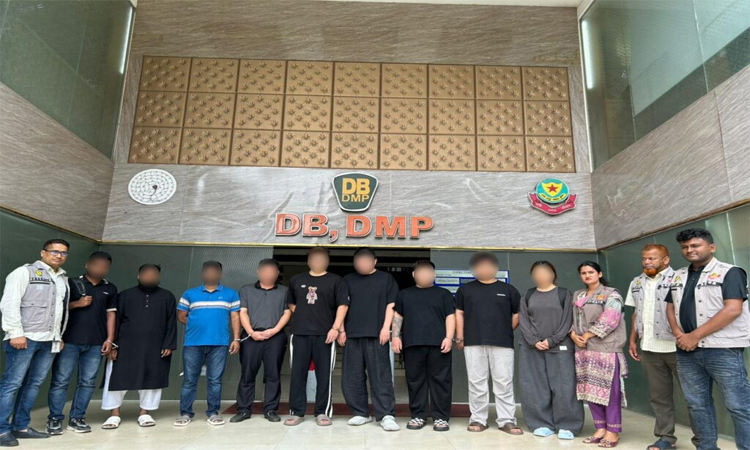
 Nine Arrested in Major Online Gambling and Cyber Fraud Operation in Dhaka
Article Content

- •Nine individuals, including six Chinese nationals, were arrested for online gambling and fraud.
- •The group used mobile financial services to collect and launder money abroad.
- •Police seized high-tech equipment, including GSM gateway devices and hundreds of SIM cards.
On May 14, 2026, the Detective Branch of Dhaka Metropolitan Police arrested nine individuals, including six Chinese nationals, for their involvement in online gambling, cyber fraud, and illegal digital financial transactions. The arrests occurred during raids in Uttara and Turag, where police seized significant equipment including GSM gateway devices and approximately 280 SIM cards. The suspects allegedly lured victims with promises of high returns on investments through fraudulent gambling platforms. The group reportedly used mobile financial services like bKash and Nagad to collect funds, which were then laundered abroad, primarily to China. A case has been filed under the Cyber Security Act, and the suspects are currently in custody for interrogation. The police highlighted the ease with which these networks operate and their harmful impact on the Bangladeshi economy.
Ask AI about this cluster
Answers cite the sources they use
Timeline
More articles in this cluster (9)
Following this threat?
Track YouTube in your own feed — you're alerted when they show up in new reporting, leak sites or exploitation.
Free account · no card needed
Continue Reading
 Critical WSO2 API Manager Vulnerability Under Active Exploitation A critical vulnerability (CVE-2026-5430) in WSO2 API Manager is being actively exploited, allowing unauthenticated attackers to forge admin tokens via JWT authentication bypass. This flaw, which has a CVSS score of 10.0, affects multiple WSO2 products including API Manager, Universal Gateway, Traffic Manager, and API…
  Critical Linux Kernel Vulnerability CVE-2025-39682 Under Active Exploitation A critical vulnerability (CVE-2025-39682) in the Linux kernel allows remote code execution through mishandling of zero-length TLS records. This flaw affects kTLS-enabled hosts running vulnerable kernel versions, exposing them to attackers without authentication. CISA added this vulnerability to its Known Exploited…