 www.straitstimes.com
 South Korea Enforces Laws Against AI Deepfakes Ahead of Local Elections
Article Content

- •South Korea's local elections on June 3 will test new laws against AI deepfakes.
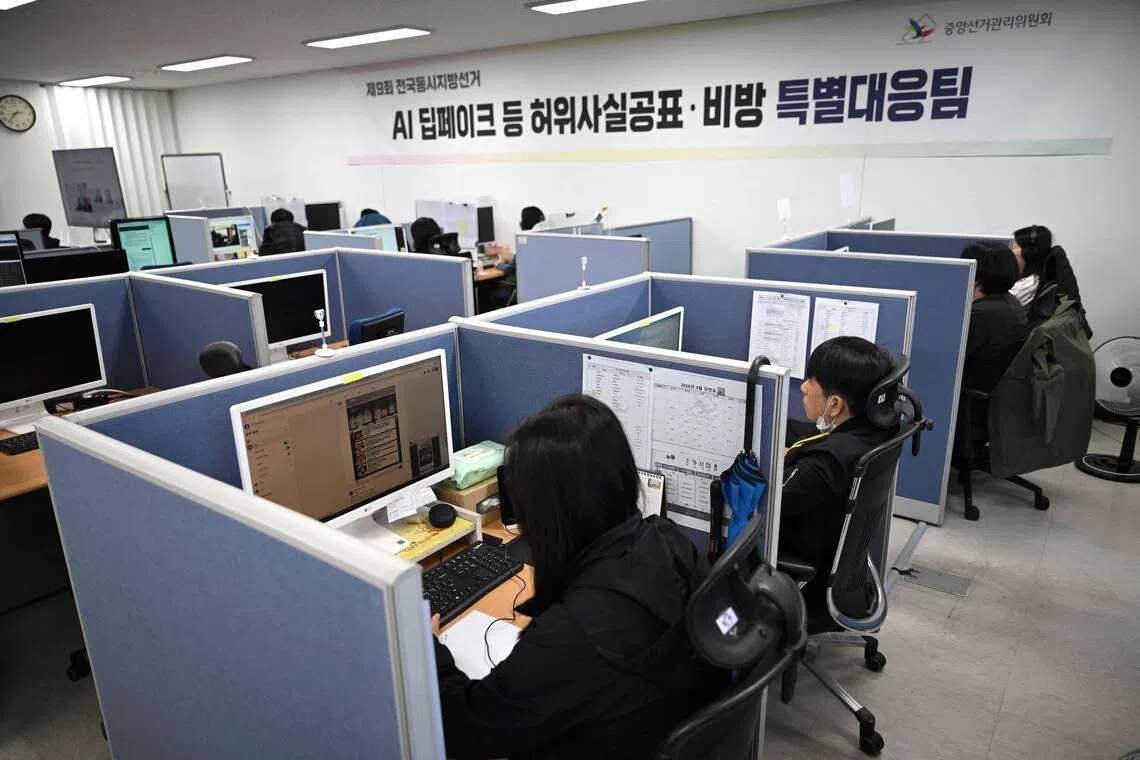
- •The National Election Commission has hired hundreds to monitor and counter AI-generated disinformation.
- •Severe penalties, including jail time, can be imposed for the use of misleading AI content.
South Korea is set to hold local elections on June 3, 2026, implementing new laws to combat AI-generated deepfakes in political campaigns. The regulations, established in 2023, prohibit the use of misleading virtual content 90 days prior to elections. As the election date approaches, the National Election Commission has mobilized hundreds of workers to monitor social media for disinformation. Experts note that the rapid advancement of AI technology complicates efforts to identify and remove fake content. Recent examples of deepfakes include a false news report about a mayoral candidate and an AI-generated song promoting a politician. The authorities can impose severe penalties for confirmed violations, including jail time. The effectiveness of these laws will be tested as the election draws near, with concerns about the speed at which disinformation spreads through various channels.
Ask AI about this cluster
Answers cite the sources they use
Timeline
More articles in this cluster (3)
Continue Reading
 Critical WSO2 API Manager Vulnerability Under Active Exploitation A critical vulnerability (CVE-2026-5430) in WSO2 API Manager is being actively exploited, allowing unauthenticated attackers to forge admin tokens via JWT authentication bypass. This flaw, which has a CVSS score of 10.0, affects multiple WSO2 products including API Manager, Universal Gateway, Traffic Manager, and API…
  Critical Linux Kernel Vulnerability CVE-2025-39682 Under Active Exploitation A critical vulnerability (CVE-2025-39682) in the Linux kernel allows remote code execution through mishandling of zero-length TLS records. This flaw affects kTLS-enabled hosts running vulnerable kernel versions, exposing them to attackers without authentication. CISA added this vulnerability to its Known Exploited…