 United24Media
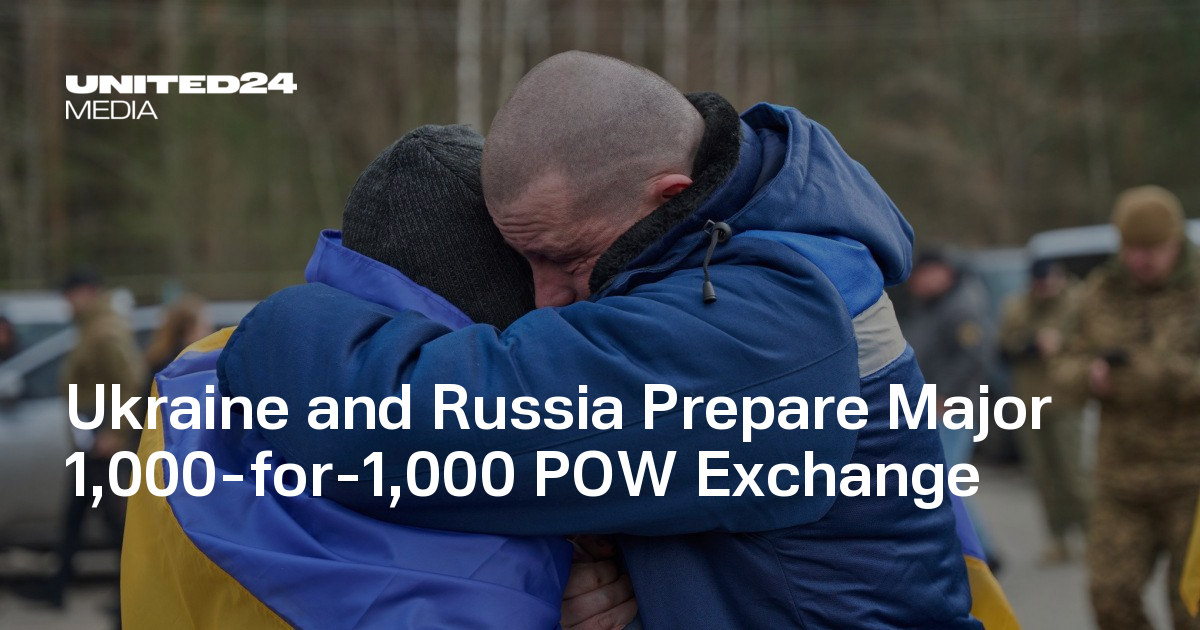
 Ukraine and Russia Prepare for 1000-for-1000 POW Exchange Amid Ongoing Conflict
Article Content

- •Ukraine submitted a list of 1,000 POWs for exchange with Russia, prioritizing duration of captivity.
- •U.S. mediation is crucial for the implementation of the POW exchange agreement.
- •A temporary ceasefire was proposed by the U.S. to facilitate the exchange and ongoing negotiations.
Ukraine has submitted a list of 1,000 prisoners of war to Russia as part of a planned exchange, facilitated by the United States. This initiative follows negotiations aimed at addressing the humanitarian situation stemming from the ongoing conflict. The list prioritizes prisoners based on the duration of their captivity since the start of Russia's full-scale invasion. Ukrainian President Volodymyr Zelenskyy confirmed the exchange preparations and emphasized the role of the U.S. in ensuring the agreements are implemented. The proposed exchange is part of a broader effort to achieve a ceasefire and potentially pave the way for peace talks. The U.S. President Donald Trump announced a temporary ceasefire coinciding with the exchange, highlighting the urgency of the situation. The Coordination Headquarters for the Treatment of Prisoners of War urged the public to refrain from sharing unverified information to maintain negotiation effectiveness.
Ask AI about this cluster
Answers cite the sources they use
Timeline
More articles in this cluster (3)
Continue Reading
 Critical WSO2 API Manager Vulnerability Under Active Exploitation A critical vulnerability (CVE-2026-5430) in WSO2 API Manager is being actively exploited, allowing unauthenticated attackers to forge admin tokens via JWT authentication bypass. This flaw, which has a CVSS score of 10.0, affects multiple WSO2 products including API Manager, Universal Gateway, Traffic Manager, and API…
  Critical Linux Kernel Vulnerability CVE-2025-39682 Under Active Exploitation A critical vulnerability (CVE-2025-39682) in the Linux kernel allows remote code execution through mishandling of zero-length TLS records. This flaw affects kTLS-enabled hosts running vulnerable kernel versions, exposing them to attackers without authentication. CISA added this vulnerability to its Known Exploited…