 En.Defence-Ua
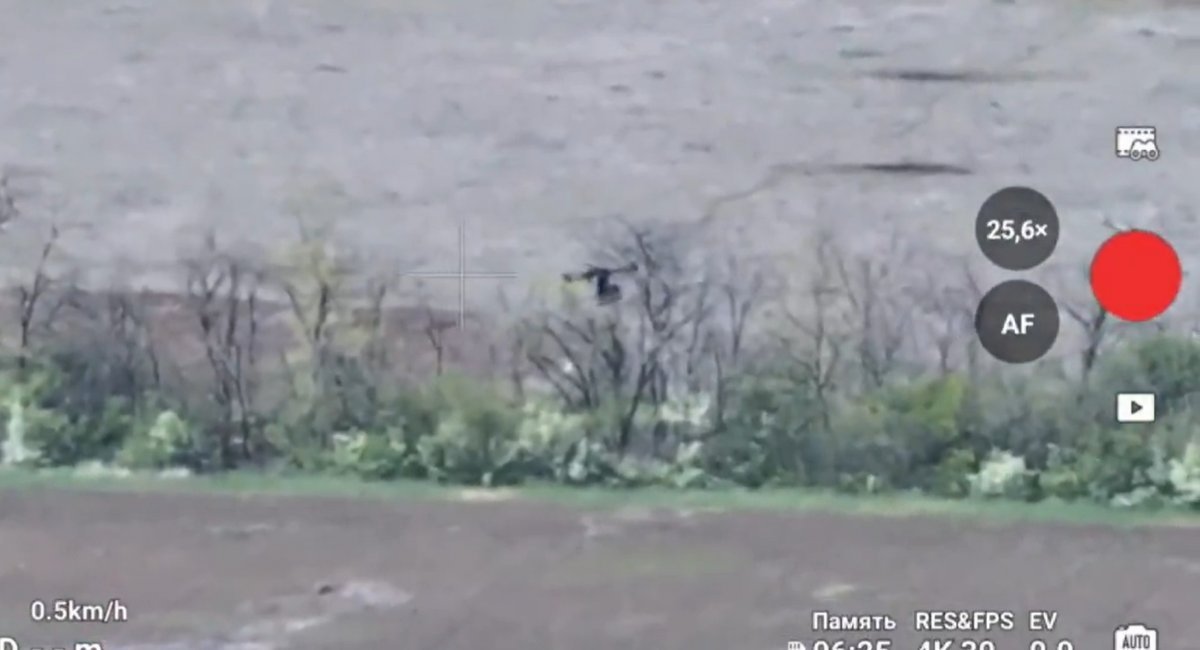
 Ukrainian Baba Yaga Drone Engages Russian Troops Near Huliaipole
Article Content

- •Ukrainian 'Baba Yaga' drone attacks Russian troops with machine guns and bombs.
- •The drone's dual attack capabilities allow for flexible targeting of infantry and vehicles.
- •Russia is reportedly behind Ukraine in heavy drone technology and is working to improve its capabilities.
A Ukrainian heavy drone, referred to as 'Baba Yaga' by Russian forces, has been recorded attacking Russian infantry positions near Varvarivka, close to Huliaipole in the Zaporizhzhia region. The drone, equipped with a mounted machine gun and a bomb-release system, was filmed by a Russian reconnaissance drone during its engagement. The footage shows the drone utilizing both direct fire and aerial munitions, demonstrating its operational flexibility against various targets, including infantry and lightly armored vehicles. Analysts note that while similar drone systems have been observed since 2024, verified footage remains scarce. The Ukrainian military's use of such drones is seen as a cost-effective strategy to target Russian forces. Russia has acknowledged its lag in developing heavy combat drones and is reportedly working to enhance its capabilities in this area. The current status indicates ongoing engagements utilizing these drone systems.
Ask AI about this cluster
Answers cite the sources they use
Timeline
More articles in this cluster (2)
Continue Reading
 Critical WSO2 API Manager Vulnerability Under Active Exploitation A critical vulnerability (CVE-2026-5430) in WSO2 API Manager is being actively exploited, allowing unauthenticated attackers to forge admin tokens via JWT authentication bypass. This flaw, which has a CVSS score of 10.0, affects multiple WSO2 products including API Manager, Universal Gateway, Traffic Manager, and API…
  Critical Linux Kernel Vulnerability CVE-2025-39682 Under Active Exploitation A critical vulnerability (CVE-2025-39682) in the Linux kernel allows remote code execution through mishandling of zero-length TLS records. This flaw affects kTLS-enabled hosts running vulnerable kernel versions, exposing them to attackers without authentication. CISA added this vulnerability to its Known Exploited…