 Unn.Ua
 Ukrainians Targeted by Phishing Scheme with Fake Electricity Bills
Article Content

- •Ukrainians are receiving phishing emails with fake electricity bills from scammers.
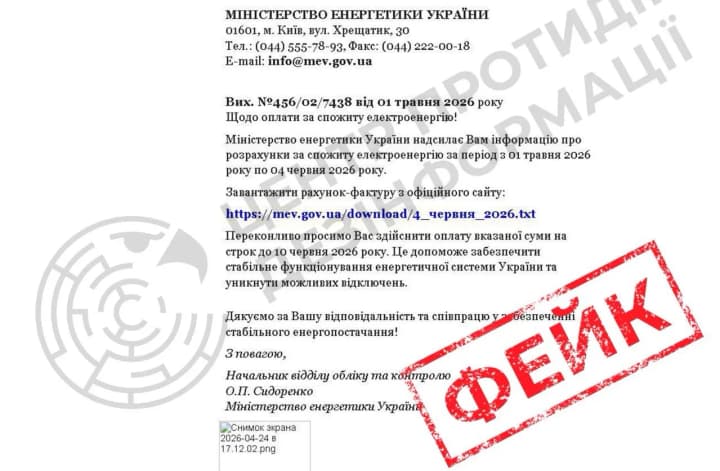
- •The Ministry of Energy does not send payment requests, and consumers should verify sources.
- •The National Bank of Ukraine warns of related fraudulent emails imitating official communications.
A new cyber fraud campaign is targeting Ukrainians with mass emails and messenger notifications containing fake electricity bills purportedly from the Ministry of Energy. The Center for Countering Disinformation of the NSDC of Ukraine confirmed that the Ministry does not send payment letters to consumers. The attackers aim to trick individuals into clicking on malicious links to steal personal data, compromise social media accounts, and gain access to bank accounts. The National Bank of Ukraine has also identified a related fraudulent campaign involving emails mimicking official correspondence. This phishing scheme is part of a broader trend of cyber fraud affecting the population. Citizens are advised to remain vigilant and avoid clicking on suspicious links. The Ministry of Energy emphasizes that utility payment collection is the responsibility of designated energy companies, not the government.
Ask AI about this cluster
Answers cite the sources they use
Timeline
More articles in this cluster (2)
Continue Reading
 Critical WSO2 API Manager Vulnerability Under Active Exploitation A critical vulnerability (CVE-2026-5430) in WSO2 API Manager is being actively exploited, allowing unauthenticated attackers to forge admin tokens via JWT authentication bypass. This flaw, which has a CVSS score of 10.0, affects multiple WSO2 products including API Manager, Universal Gateway, Traffic Manager, and API…
  Critical Linux Kernel Vulnerability CVE-2025-39682 Under Active Exploitation A critical vulnerability (CVE-2025-39682) in the Linux kernel allows remote code execution through mishandling of zero-length TLS records. This flaw affects kTLS-enabled hosts running vulnerable kernel versions, exposing them to attackers without authentication. CISA added this vulnerability to its Known Exploited…