 astanatimes.com
 U.S. Engages Central Asia to Mitigate Chinese Control Over Critical Minerals
Article Content

- •U.S. seeks to reduce reliance on China for critical minerals by engaging Central Asia.
- •Kazakhstan is a focal point for U.S. investment in mineral extraction, with a $700 million financing plan.
- •The region has significant underdeveloped deposits, presenting opportunities for collaboration.
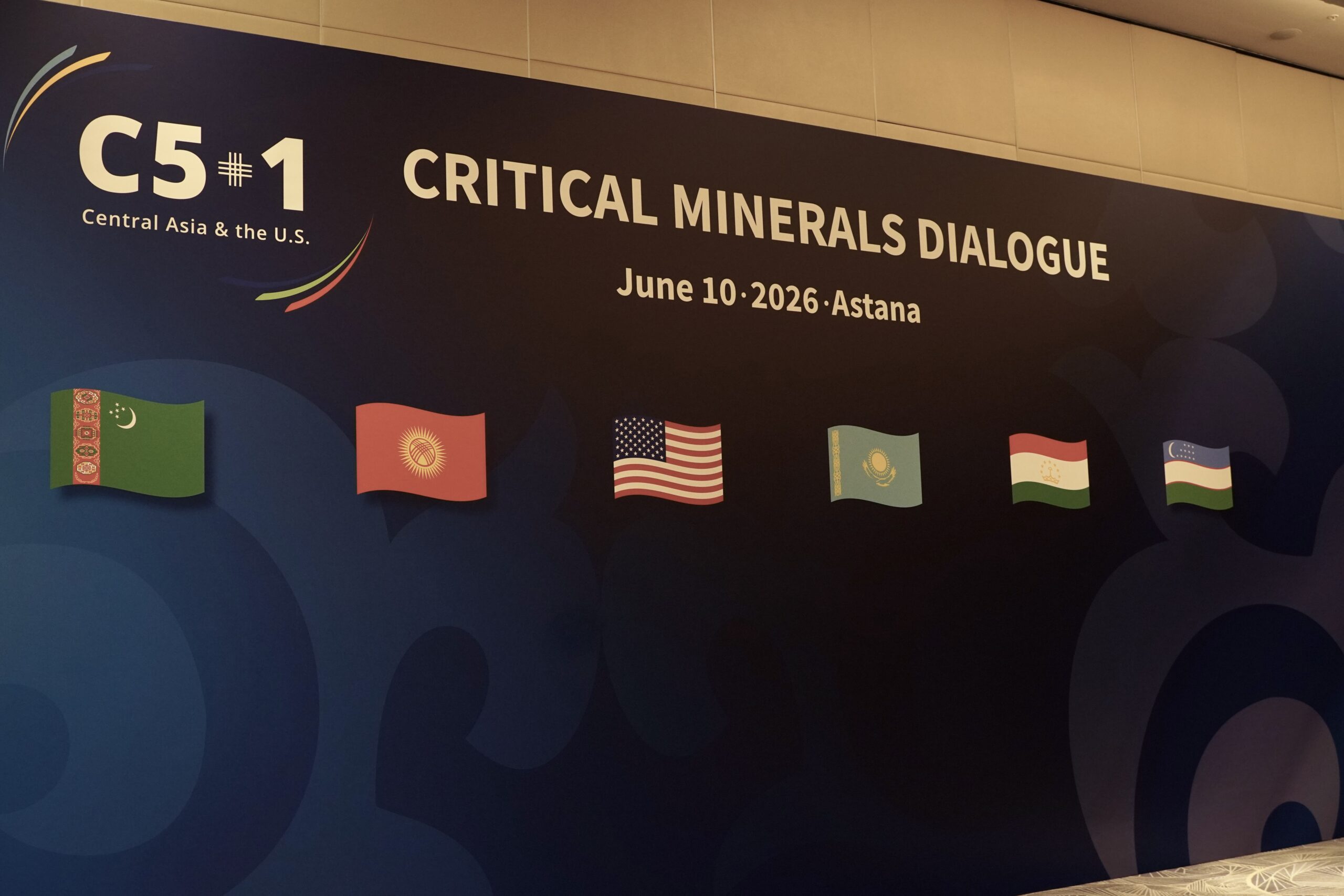
On June 10, 2026, the U.S. hosted the C5+1 Critical Minerals Dialogue in Astana, Kazakhstan, to enhance cooperation with Central Asian nations in critical mineral supply chains. This initiative aims to reduce U.S. dependence on China, which currently dominates the global critical minerals market, controlling around 70% of the refining capacity. The U.S. is exploring financing options, including a $700 million investment in Kazakh tungsten extraction. Central Asia, rich in underdeveloped mineral deposits, is seen as a strategic partner in diversifying supply chains. U.S. officials, including Special Envoy Sergio Gor, emphasized the importance of collaboration with Kazakhstan and its neighbors to secure critical resources. The region's reforms to attract foreign investment, such as adopting international standards, are also highlighted as key to successful partnerships. The dialogue coincided with the Astana Mining and Metallurgy Conference, which saw increased U.S. participation.
Ask AI about this cluster
Answers cite the sources they use
Timeline
More articles in this cluster (2)
Continue Reading
 Critical Zero-Day Vulnerability in Cisco Secure Email Gateway Exploited On September 14, 2026, Cisco disclosed a critical SQL injection vulnerability (CVE-2026-76461) in its Secure Email Gateway, allowing unauthenticated remote attackers to execute arbitrary commands with root privileges. This vulnerability arises from insufficient validation in the email parsing logic. Cisco confirmed…
  Critical WSO2 API Manager Vulnerability Under Active Exploitation A critical vulnerability (CVE-2026-5430) in WSO2 API Manager is being actively exploited, allowing unauthenticated attackers to forge admin tokens via JWT authentication bypass. This flaw, which has a CVSS score of 10.0, affects multiple WSO2 products including API Manager, Universal Gateway, Traffic Manager, and API…