 United24Media
 Germany Bans Personal Devices in Defense Due to Espionage Threats
Article Content

- •Personal devices banned in German Ministry of Defense meetings due to espionage risks.
- •Employees must store personal gadgets in lockers before sensitive discussions.
- •The Bundeswehr is a primary target for espionage from Russia and China.
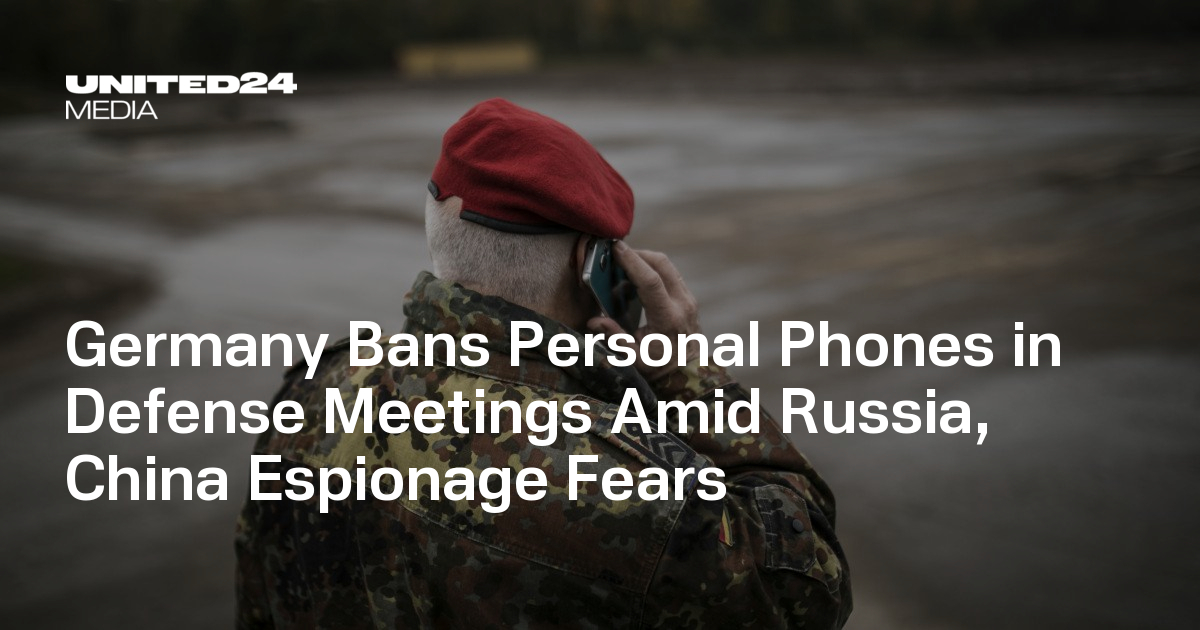
The German Ministry of Defense has imposed strict restrictions on the use of personal mobile devices, including smartphones, tablets, and smartwatches, in response to heightened espionage threats from Russia and China. A security directive issued in mid-February prohibits these devices from being brought to meetings discussing classified information, particularly those related to military operations and combat readiness. Employees must store personal gadgets in lockers before such meetings. The directive highlights the vulnerability of personal devices to malware and phishing attacks, which could lead to significant data breaches. The Bundeswehr is identified as a priority target for foreign intelligence activities. While most staff have access to secure work phones, many continue to use personal devices due to restrictions on popular messaging apps. The new rules are less stringent than those in other agencies like the Federal Intelligence Service, which bans personal devices entirely.
Ask AI about this cluster
Answers cite the sources they use
Timeline
More articles in this cluster (5)
Continue Reading
 CVE-2015-3306 Exploited in ProFTPD FTP Servers CVE-2015-3306, a vulnerability in ProFTPD 1.3.5, allows remote attackers to read and write arbitrary files using the SITE CPFR and SITE CPTO commands. This exploit can lead to unauthorized access and potential remote code execution, as the commands are executed with the privileges of the ProFTPD service. Active…
  CISA Mandates Urgent Patching of Five Critical Flaws Exploited by Flax Typhoon The U.S. Cybersecurity and Infrastructure Security Agency (CISA) has ordered federal agencies to patch five critical vulnerabilities by October 11, 2026, following exploitation by the China-linked hacking group Flax Typhoon. The vulnerabilities, added to CISA's Known Exploited Vulnerabilities (KEV) catalog, include…