 abnormal.ai
 iAuthFlow V2 Phishing Kit Enables Rogue Passkey Enrollment for Persistent Account Access
Article Content

- •iAuthFlow V2 phishing kit allows persistent access via rogue passkeys.
- •The toolkit employs a browser-in-the-middle attack method.
- •Organizations should monitor for newly registered passkeys post-compromise.
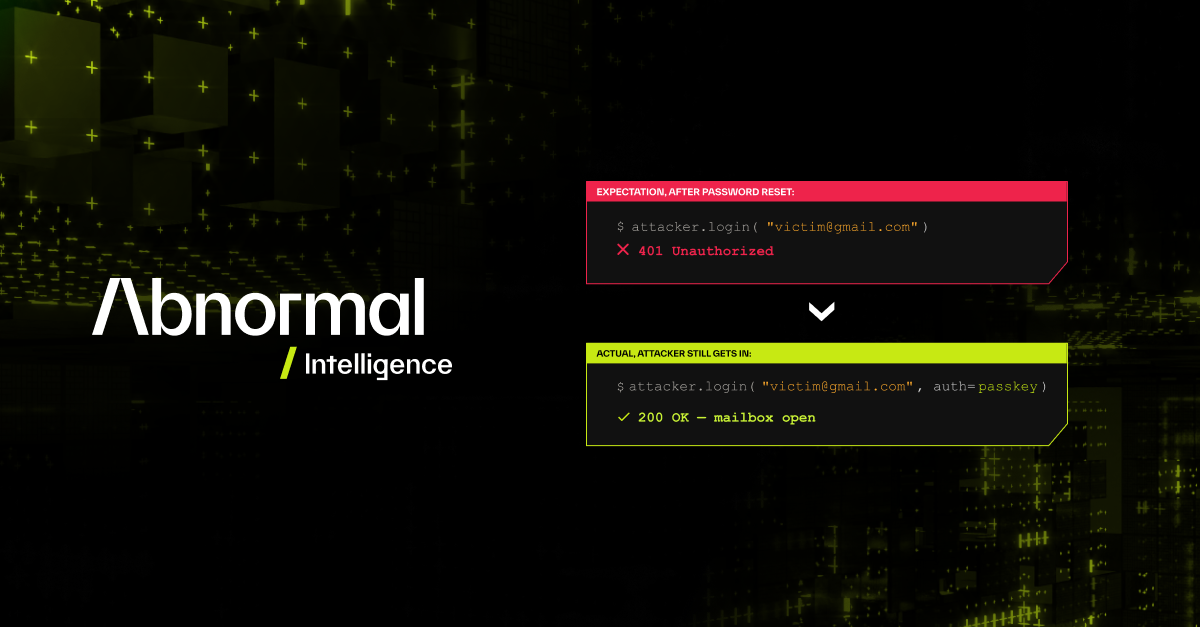
The iAuthFlow V2 phishing toolkit, available for $10,000, allows attackers to enroll rogue passkeys on compromised accounts, ensuring persistent access even after victims change their passwords. This attack employs a browser-in-the-middle (BitM) technique, where victims interact with a phishing page while their credentials are relayed to an attacker-controlled browser. The kit targets services like Google, Microsoft, and iCloud, and has been observed in Russian-language cybercrime forums. Abnormal Security has documented the toolkit's capabilities, including a demonstration where a passkey was registered just six seconds after authentication. Organizations should be vigilant for newly registered passkeys during account compromise investigations. The toolkit's architecture enables attackers to bypass traditional security measures like session revocation and password changes.
Ask AI about this cluster
Answers cite the sources they use
Timeline
More articles in this cluster (5)
Following this threat?
Track Google in your own feed — you're alerted when they show up in new reporting, leak sites or exploitation.
Free account · no card needed
Continue Reading
 CVE-2015-3306 Exploited in ProFTPD FTP Servers CVE-2015-3306, a vulnerability in ProFTPD 1.3.5, allows remote attackers to read and write arbitrary files using the SITE CPFR and SITE CPTO commands. This exploit can lead to unauthorized access and potential remote code execution, as the commands are executed with the privileges of the ProFTPD service. Active…
  CISA Mandates Urgent Patching of Five Critical Flaws Exploited by Flax Typhoon The U.S. Cybersecurity and Infrastructure Security Agency (CISA) has ordered federal agencies to patch five critical vulnerabilities by October 11, 2026, following exploitation by the China-linked hacking group Flax Typhoon. The vulnerabilities, added to CISA's Known Exploited Vulnerabilities (KEV) catalog, include…