 dx.doi.org
Evaluation of Lightweight and Federated Learning Models for IIoT Intrusion Detection
Ask AI about this cluster
Analyzing cluster data...
Referenced clusters:
Something went wrong. Please try again.
Cluster AI
Ask questions about this threat cluster with AI-powered analysis.
Get Researcher $29.99/moArticle Content
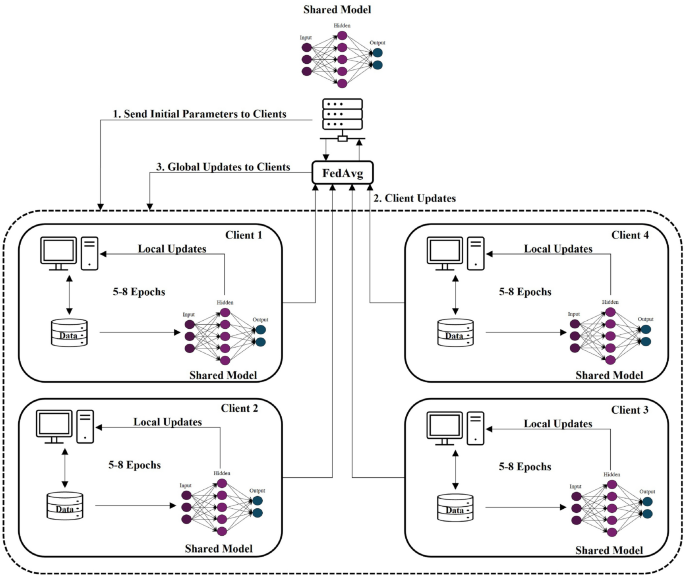
Recent studies published on July 2, 2026, focus on the effectiveness of lightweight machine learning models and federated learning in intrusion detection systems (IDS) for Industrial Internet of Things (IIoT) networks. Article 1 highlights that existing models often overfit to training datasets, leading to unverified performance on unseen networks. It emphasizes the need for cross-network evaluation under realistic class distributions. Article 2 discusses federated learning approaches that address privacy concerns but also face challenges in generalization across diverse datasets. Both studies reveal that models trained on specific datasets may not perform well in different environments, with significant performance degradation observed in cross-dataset evaluations. The findings suggest a need for improved training strategies that encompass diverse attack scenarios and environments to enhance the robustness of IDS in IIoT settings.
Key Points: • Lightweight models for IIoT IDS show overfitting risks when evaluated on unseen networks. • Federated learning models can achieve high accuracy but struggle with generalization across datasets. • Cross-network evaluation is essential for assessing the deployment readiness of intrusion detection systems.