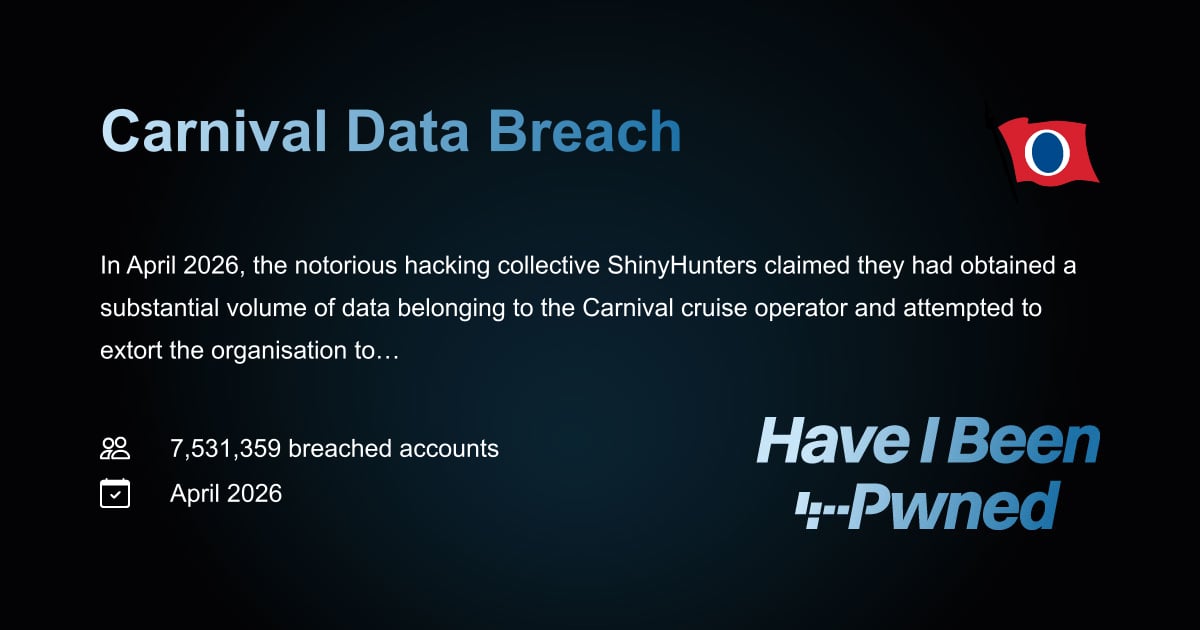
 haveibeenpwned.com
 ShinyHunters Breach Exposes 7.5M Emails from Carnival's Loyalty Program
Article Content

- •ShinyHunters claims to have leaked 8.7 million records from Carnival's loyalty program.
- •Carnival reported a phishing attack involving a single user account but downplayed the breach's scope.
- •The exposed data includes sensitive personal information, raising risks of phishing and fraud.
In April 2026, the hacking group ShinyHunters claimed to have breached Carnival Corporation, exposing 8.7 million records, including 7.5 million unique email addresses tied to the Mariner Society loyalty program of Holland America Line. The leaked data contains personal information such as names, dates of birth, genders, and membership status. Carnival acknowledged a phishing attack that compromised a single user account but downplayed the incident's scope. ShinyHunters, known for extortion tactics, published the data after negotiations with Carnival reportedly failed. The breach raises concerns about potential phishing and fraud targeting affected individuals. The company is currently investigating the incident and has not confirmed the full extent of the data accessed. Security experts advise affected customers to be vigilant about their email security.
Ask AI about this cluster
Answers cite the sources they use
Timeline
More articles in this cluster (4)
Following this threat?
Track Carnival in your own feed — you're alerted when they show up in new reporting, leak sites or exploitation.
Free account · no card needed
Continue Reading
 Critical Zero-Day Exploited in BeyondTrust Remote Support by China-linked Group A critical vulnerability in BeyondTrust Remote Support, tracked as CVE-2026-102764 with a CVSS score of 9.3, has been exploited by the China-linked espionage group Armory Castle since August 29, 2026. This flaw allows unauthenticated remote attackers to perform file operations, gaining root control and access to…
  CISA Warns of Exploited Vulnerabilities in ProFTPD, ONLYOFFICE, Strapi, and More The U.S. Cybersecurity and Infrastructure Security Agency (CISA) added five vulnerabilities to its Known Exploited Vulnerabilities (KEV) catalog, including critical flaws in ProFTPD, ONLYOFFICE Docs, Strapi, Apache Struts, and ISC BIND. These vulnerabilities are being by Chinese actors for cyber espionage, targeting…