 Isc.Sans.Edu
 Reconnaissance for MCP Servers and AI Credentials Intensifies
Article Content

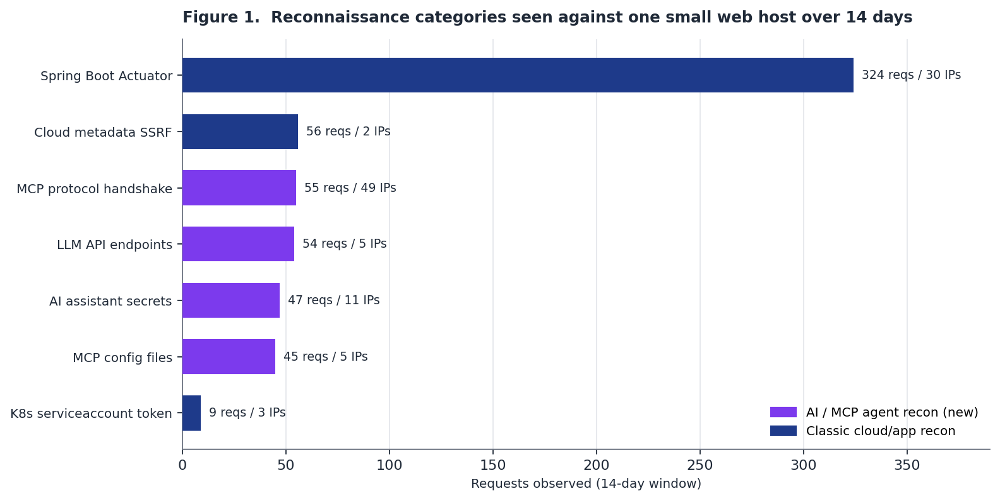
- •Approximately 200 reconnaissance requests targeting MCP servers were logged over 14 days.
- •Scans involved valid protocol handshakes, indicating a sophisticated attack method.
- •49 distinct IP addresses were involved in the scanning activity, suggesting a distributed effort.
A recent analysis of Apache and ModSecurity logs revealed a surge in internet-wide reconnaissance targeting Model Context Protocol (MCP) servers and AI assistant configuration files. Over a 14-day period, approximately 200 requests were identified, indicating a systematic effort by attackers to discover exposed MCP endpoints. These scans were not random; they involved valid protocol handshakes, suggesting a sophisticated approach to identifying vulnerable systems. The reconnaissance included attempts to access various AI-related services, with a notable number of requests coming from 49 distinct IP addresses. This activity poses a significant risk, as exposed MCP servers can provide unauthorized access to sensitive data and system functionalities. The scanning behavior aligns with a broader trend of increasing focus on AI-related infrastructure. Security professionals are advised to monitor their systems for these specific scanning patterns and ensure proper authentication measures are in place.
Ask AI about this cluster
Answers cite the sources they use
Timeline
More articles in this cluster (2)
Following this threat?
Track Cursor in your own feed — you're alerted when they show up in new reporting, leak sites or exploitation.
Free account · no card needed
Continue Reading
 CVE-2015-3306 Exploited in ProFTPD FTP Servers CVE-2015-3306, a vulnerability in ProFTPD 1.3.5, allows remote attackers to read and write arbitrary files using the SITE CPFR and SITE CPTO commands. This exploit can lead to unauthorized access and potential remote code execution, as the commands are executed with the privileges of the ProFTPD service. Active…
  CISA Mandates Urgent Patching of Five Critical Flaws Exploited by Flax Typhoon The U.S. Cybersecurity and Infrastructure Security Agency (CISA) has ordered federal agencies to patch five critical vulnerabilities by October 11, 2026, following exploitation by the China-linked hacking group Flax Typhoon. The vulnerabilities, added to CISA's Known Exploited Vulnerabilities (KEV) catalog, include…